
The Miniature That Measured My Progress
Recently, I found the very first miniature I ever painted.
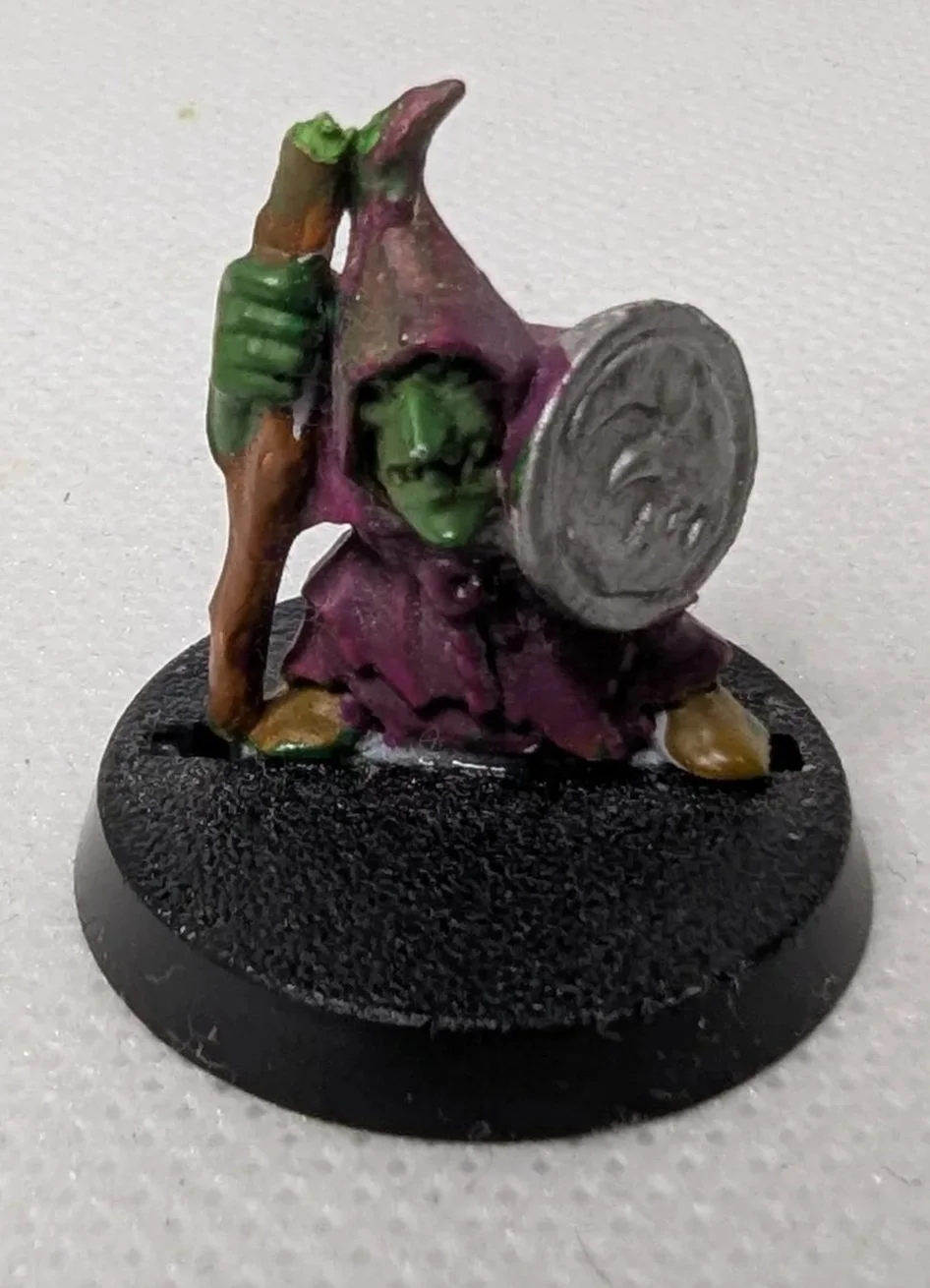
A tiny goblin with a spear and shield, painted years ago before I even new what Warhammer was, before I knew to thin my paints or that highlighting even existed.
Instead of leaving it sitting forgotten in a box somewhere, I decided to buy another copy of the same sculpt and paint it again.
Not as a competition piece.
Not as some massive technical showcase.
Just as a way to compare where I started to where I am now.
And honestly, putting the two miniatures side by side was a surprisingly exiting experience.
The Original Goblin
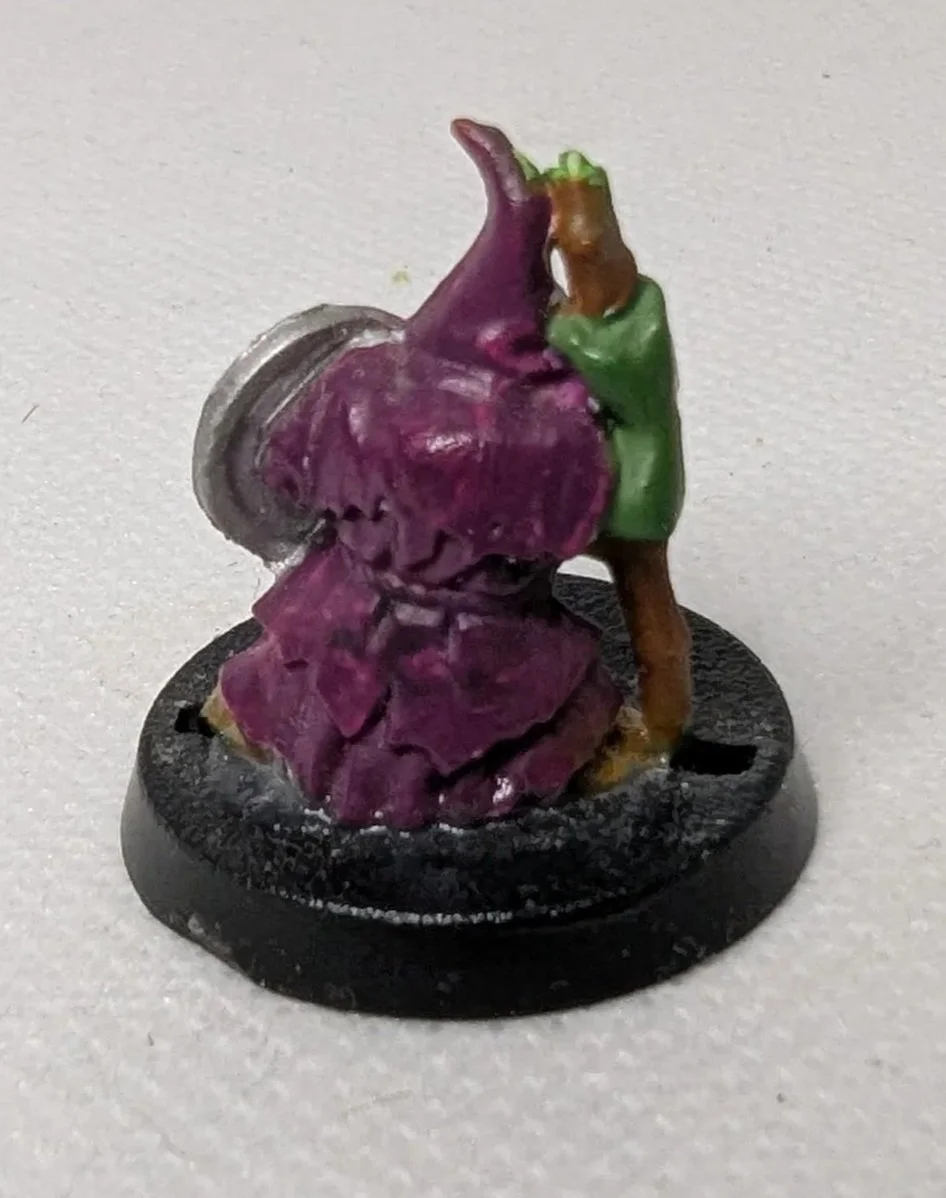
Looking back at my first painted miniature now, there’s a lot that clearly wasn’t working.
The paint is thick in places, the highlights are fairly rough, and most of the colours were applied very directly without much thought about transitions, texture, or material definition. The metallics are very simple, the base is almost entirely untreated, and overall, it really feels like someone learning by simply putting paint onto a model and hoping for the best.
But at the same time, I still really like it.
Not because it’s technically strong, but because it represents the point where all of this started for me.
At the time, I remember being incredibly proud of it.
And honestly, I should have been.
When you first start painting miniatures, every completed model feels like an achievement because there are so many small skills you’re trying to learn simultaneously. Brush control, paint consistency, colour placement, highlighting, shading, and none of it feels natural yet.
You’re not really thinking about atmosphere or composition.
You’re just trying to enjoy putting paint on your model.
This original goblin captures that stage perfectly.
Painting the New Version
Painting another model of the same sculpt felt completely different.
Even though the miniature itself is tiny and fairly simple, I approached it with a completely different mindset compared to the first time around. Instead of just applying colour, I found myself thinking constantly about transitions, material contrast, highlight and shadow positions and most importantly about how much I was enjoying the process.
The Non-Metallic Metal
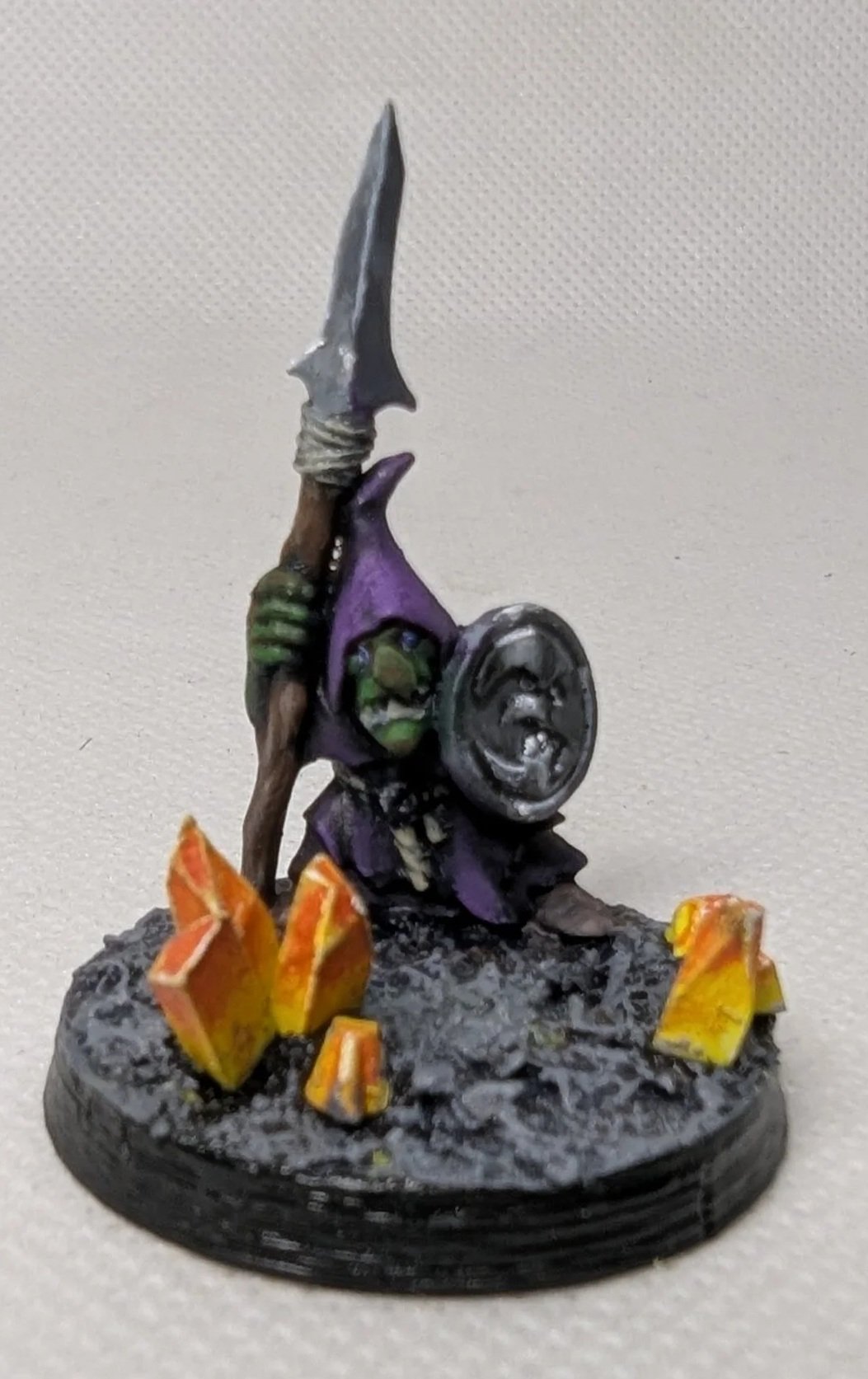
One of the things I’m most excited for on the newer miniature is the non-metallic metal on the shield and spear tip.
NMM is something I’ve experimented with before, but this was one of the first times where it felt genuinely convincing rather than simply looking like grey paint with bright highlights or like in my last post, covered up with rust effects.
The reflections read effectively, the contrast feels sharp enough to create the illusion of metal, and the surfaces catch your eye naturally without overwhelming the rest of the miniature.
Although I think I should have pushed the spear tip a little brighter, I didn’t want it to draw too much attention from the bulk of the goblin, and overall, I am happy with the effect.
Learning to Trust Glazes
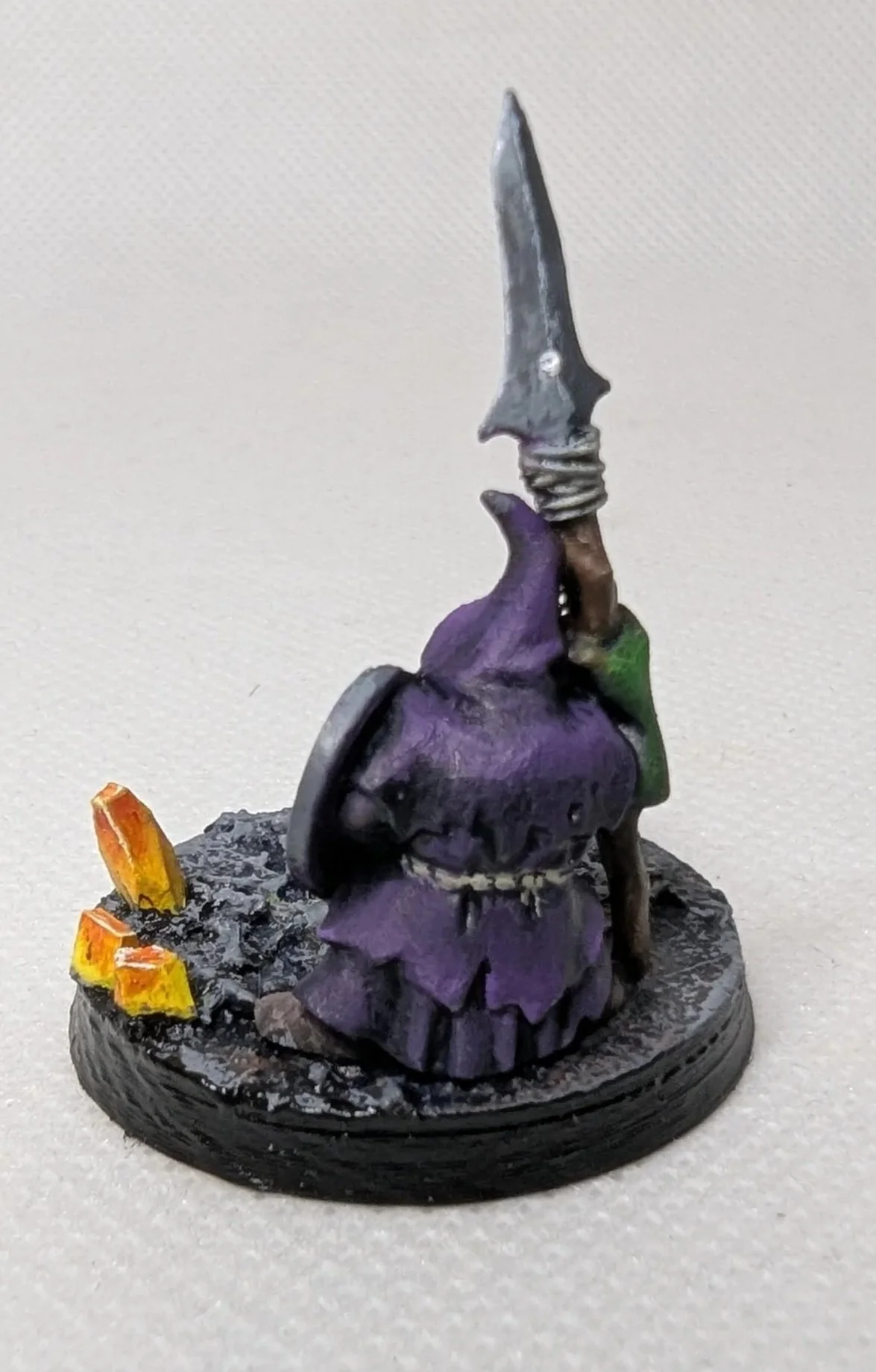
The robe was probably the area where I noticed the biggest improvement compared to my older work, mainly because it is the largest surface on the model, but it does show a tremendous amount of improvement.
I used glazes to slowly build the shadows and highlights across the cloth. The end result feels significantly softer and smoother than how I used to approach fabric.
That smoother blending is something I’ve started appreciating more and more recently.
Early on, I used to think glazes were this impossibly difficult technique, which took hundreds of hours to get a single miniature painted. To be honest, it does take longer to glaze in the transitions, but nowhere near as long or as difficult as I always thought it seemed.
I found that so long as you thin your paints well, the effect is almost automatic. Now, if you are like me, thinning your paints may seem to be an abstract term of milky water and solid particles, but after using glazes on the last few miniatures, it is really starting to click.
I found using glazes out of a wet pallet difficult to judge, so I started thinning them on a dry pallet so I could see how the paint behaved and how much paint was left behind with each stroke. Now that I have improved my understanding, I have gone back to a wet pallet, but I still like to have a dry pallet to test the consistency on.
I have found that using glazes not only makes smooth transitions easier, but it also allows me much more control over saturation and colour temperature throughout the painting process, rather than simply pushing brighter and brighter highlights of the same colour.
It’s definitely a technique I wish I had started practising properly much earlier.
Experimenting with Colour Transitions
Another small experiment on this miniature that I have always wanted to get the hang of was using red underpainting beneath the skin tones or just transitioning from one colour to the next.
I have tried this technique previously, but without fully understanding glazes the effect always looked choppy and unfinished. This time, I tried using warmer undertones intentionally rather than simply layering skin colours directly over a neutral basecoat. I focused most of the warmth around the nose, knuckles, and some of the thinner areas of the skin where blood flow would naturally create a slightly warmer colour variation.
It’s a subtle effect overall, but I think it helped stop the green skin from feeling too flat or monochromatic.
Especially on fantasy skin tones, it’s very easy for everything to become one uniform colour if you aren’t careful. Adding some warmth underneath helped create a bit more life and variation without making the skin feel overly saturated.
It’s definitely something I want to experiment with further on future projects, I am interested in trying out a transition from a shadow colour to a completely different highlight, for example, purple shadow to red.
The Base Problem
Ironically, the part of the newer miniature I’m least happy with is probably the base.
As a concept, I actually like the base. The crystals add a nice burst of colour and help break up the darker tones around the miniature. But when viewed together with the goblin itself, I don’tthink they are completed to the same standard.
The miniature has fairly soft, controlled transitions and muted tones overall, while the base feels much harsher, with rougher blends and, in some places, a solid line between colours.
I think I became so focused on the miniature that I let the base fall to the wayside.
When the base and miniature feel disconnected, even strong individual elements can compete against each other instead of working together, making the model look unfinished.
Comparing the Two
Putting both miniatures side by side really highlights how much can change over time without you fully noticing it while it’s happening.
The newer version has smoother transitions, stronger contrast placement, better material definition, and far more deliberate colour choices. There’s a level of planning and control that simply didn’t exist in the original version.
The biggest difference between the two experiences was my brush control. I have always struggled with brush control, with my hands shaking while I paint, but looking back, I can see how much cleaner and more intentional my brush strokes were with less back and forth, having to fix areas I had already painted.
But what’s interesting is that the core enjoyment, the excitement I feel when I paint, is still exactly the same, and that is something I hope to hold onto for as long as I paint.
The original goblin may not be technically polished, but it still has enthusiasm behind it. And honestly, that enthusiasm is probably more important than technical skill in the long run. Techniques can always improve with time and practice, but enjoying the process is what keeps you coming back to the hobby in the first place.
Seeing the two together reminded me that improvement in miniature painting is usually gradual enough that you rarely notice it day to day.
But over years?
The difference becomes enormous.
Looking Back
This ended up being one of the most satisfying miniatures I’ve painted in a long time, not because it was the most beautiful paint job I have done, but because it gave me a chance to actually see the progress that normally feels invisible.
Most of the time, once a project is finished, I immediately move on to the next thing I want to improve.
Better blending.
Cleaner highlights.
More atmospheric lighting.
Smoother textures.
There’s always another technique to chase.
But this project reminded me that improvement is already happening, even when it feels slow.
The newer goblin isn’t perfect. There are still areas I’d change, techniques I want to refine further, and decisions I’d probably approach differently next time.
But compared to where I started?
I’m genuinely proud of it.
And honestly, I think that’s important to acknowledge sometimes.
On to the next.
And remember: always Paint Your Way
