
Pumpkin Killer – A Return to Tradition
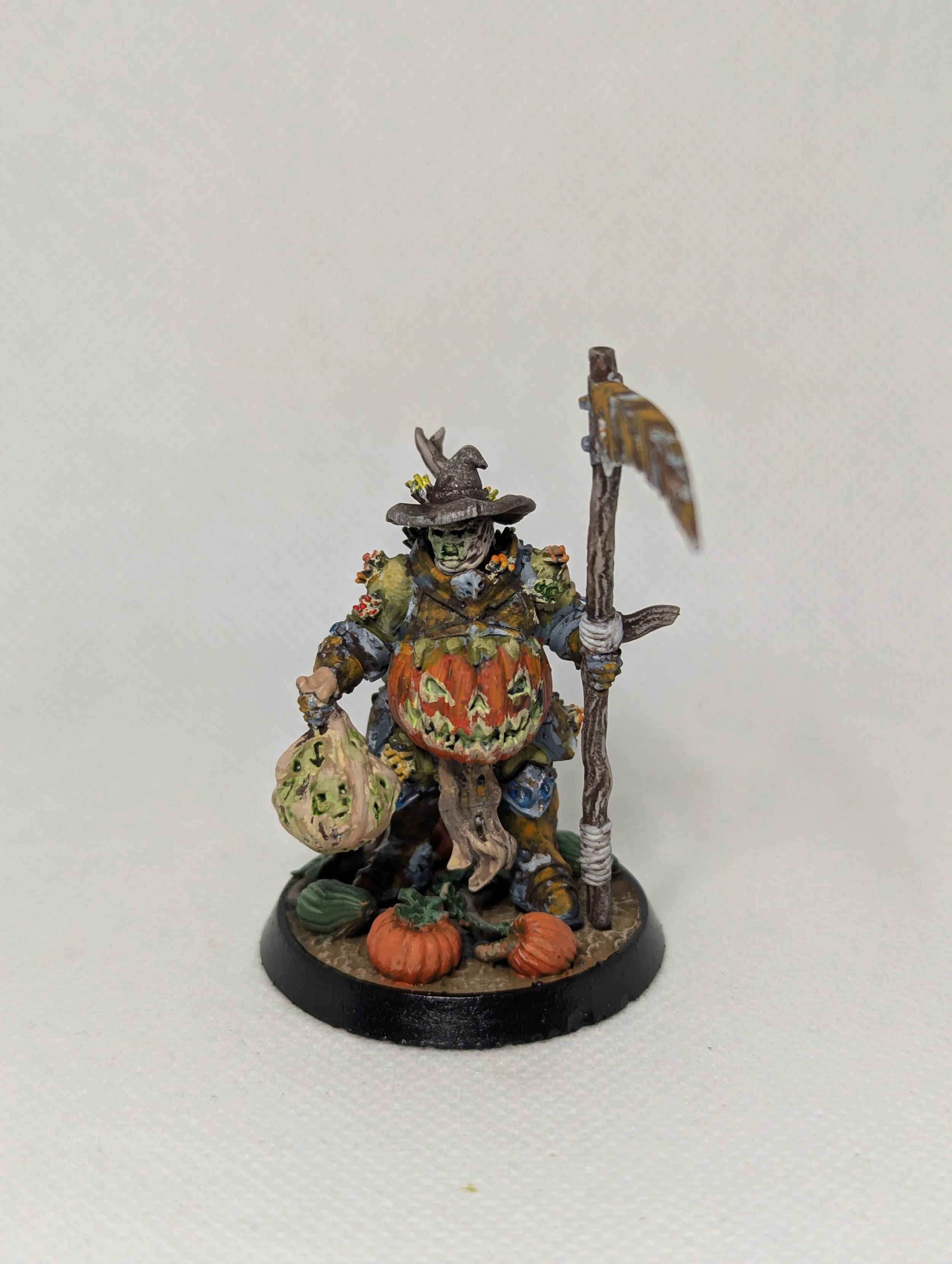
The Pumpkin Killer
After spending so long buried in the heavy Object Source Lighting experiments of the Chaos Dwarfs, which you can read about here if you are interested, this miniature ended up feeling strangely refreshing to paint.
Not because it was necessarily simpler, but because it let me return to a more traditional and familiar style of painting.
The Chaos Dwarfs pushed me into constantly thinking about environmental lighting, glow placement, reflected colours, and how every surface interacted with nearby light sources. Every model became an exercise in managing atmosphere and light behaviour first, with the sculpt itself almost becoming secondary at times.
With this new piece, I wanted the opposite.
I wanted to focus more on texture, colour variation, and the natural character already present in the sculpt instead of trying to force dramatic lighting across every surface.
And honestly, it was exactly what I needed.
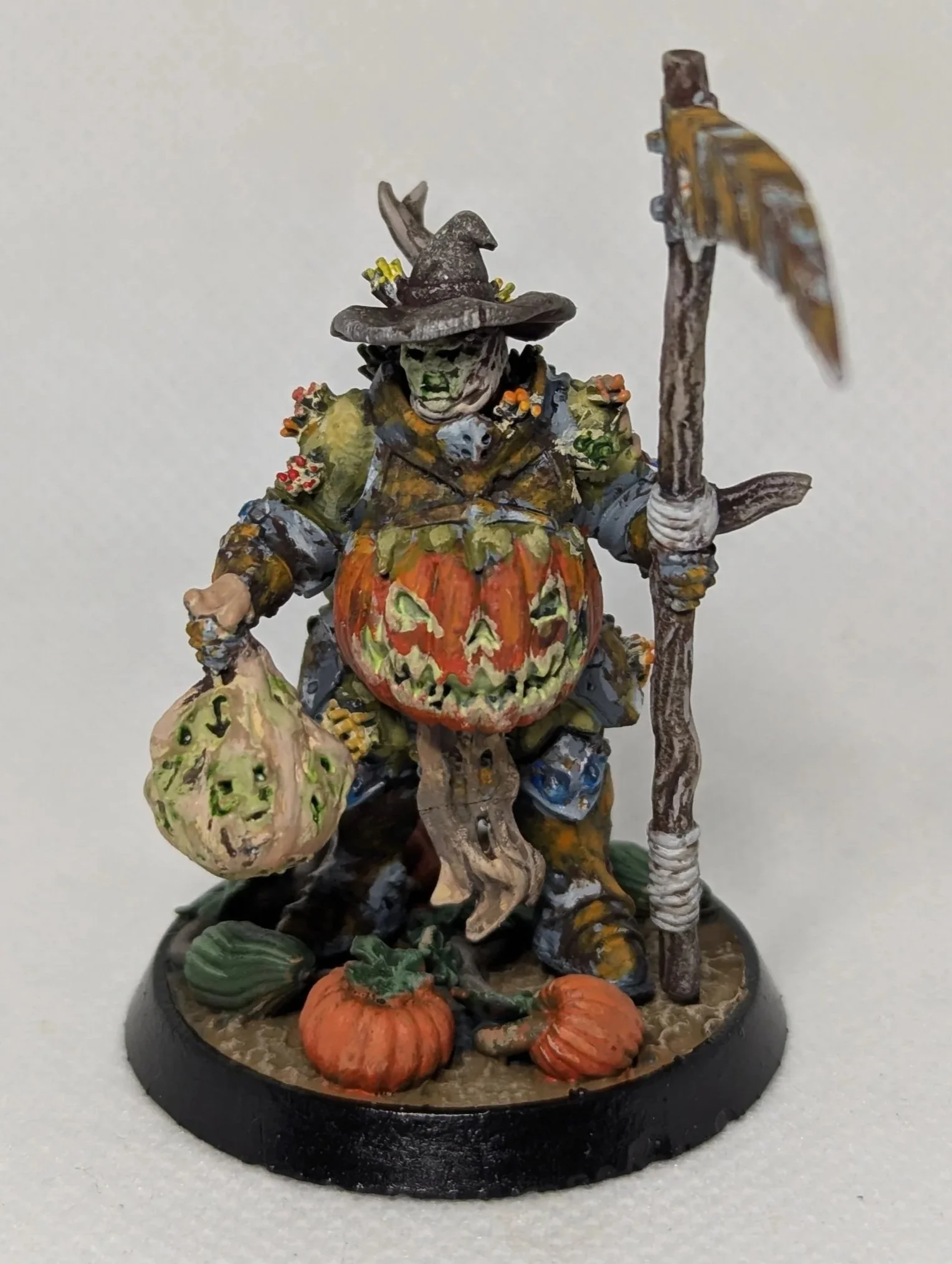
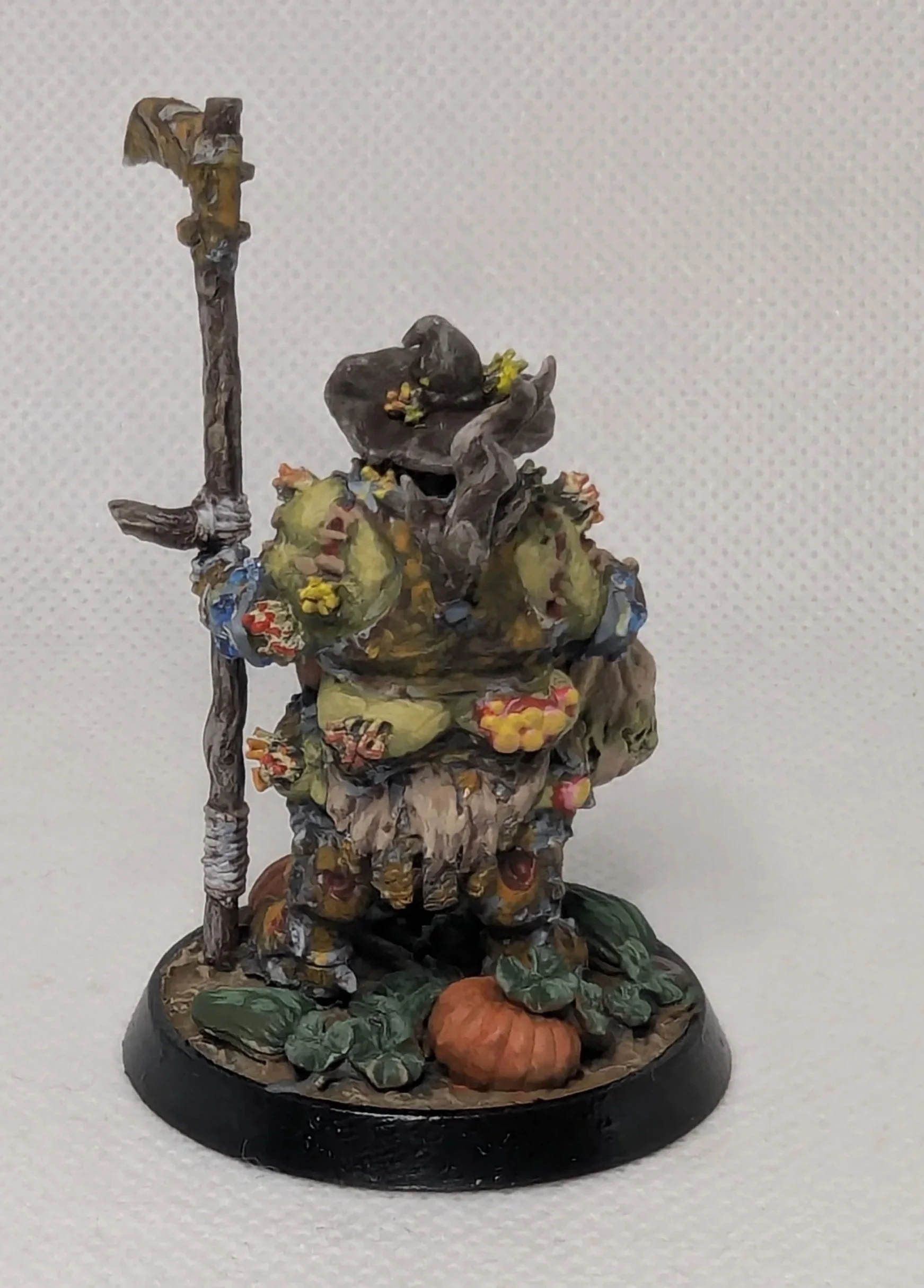
The model already had so much personality built into it that it didn’t need excessive effects to carry it. The crooked silhouette, the oversized pumpkin, the fungi growths, the weathered clothing, all of it already told a story before the paint even touched the miniature.
That gave me a lot more freedom to simply enjoy the process again.
Returning to a More Traditional Style
One of the things I enjoyed most while painting this miniature was being able to lean back into more conventional highlighting and texture work.
After the Chaos Dwarfs, where every highlight was dictated by a nearby light source, it felt nice to simply paint materials as that material again.
Cloth could just look like cloth.
Leather could just look worn and aged.
The sculpt itself could naturally guide the focal points without needing intense lighting effects everywhere.
Ironically, spending so much time focusing on OSL beforehand actually helped here quite a bit. Even though this project was far more restrained, I still found myself thinking more carefully about contrast and light placement than I would have previously.
So while this miniature is much more traditionally painted overall, I think some of the lessons from the Chaos Dwarfs still carried across naturally.
The Non-Metallic Metal That Disappeared
One of the funnier parts of this project was the weapon and chest armour.
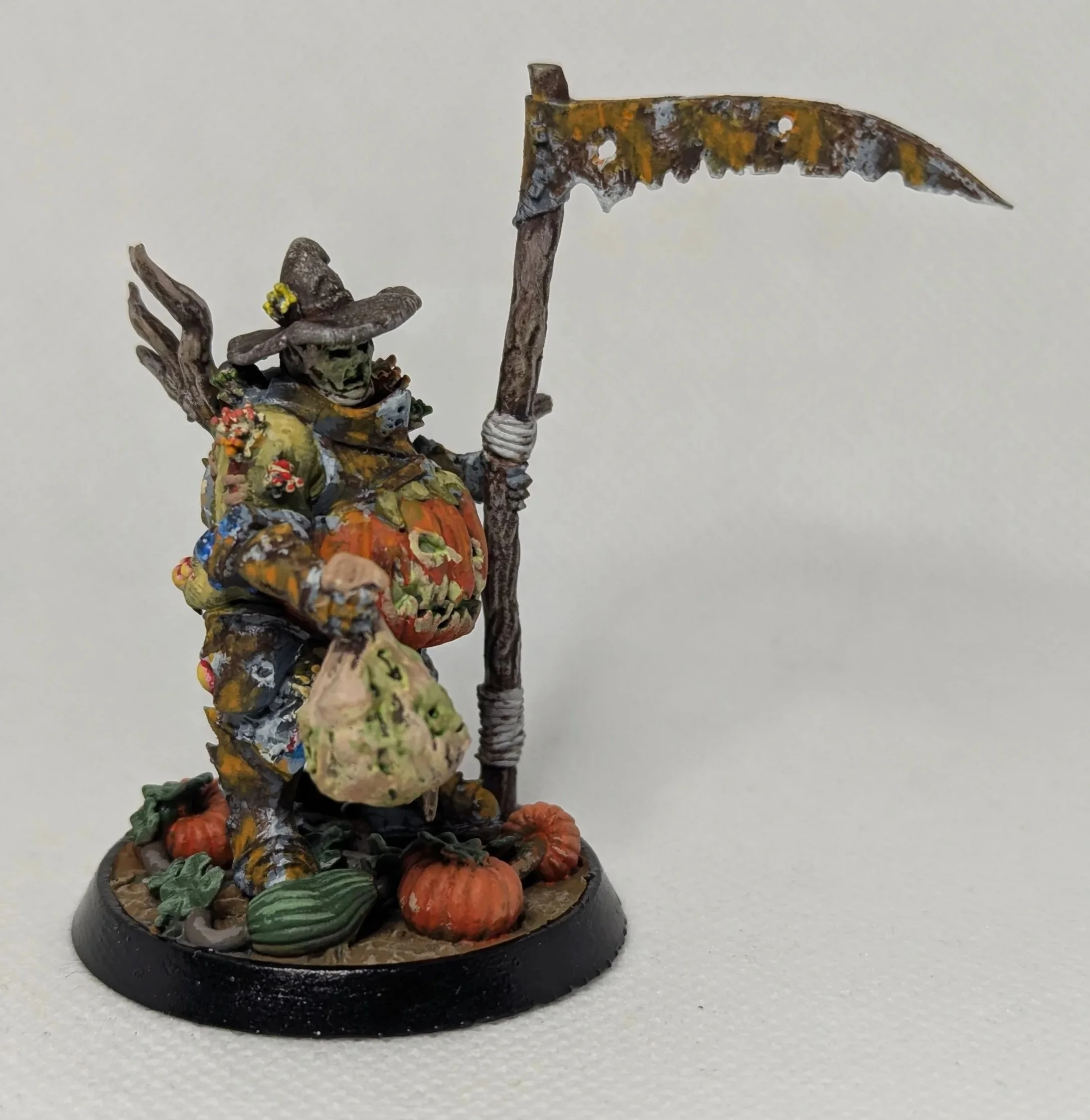
I spent a decent amount of time experimenting with some non-metallic metal and was actually really happy with how it turned out. The reflections were reading well, the contrast felt solid, and it was one of the first times I felt genuinely comfortable painting NMM rather than just following a process mechanically.
Then I covered most of it in rust.
Which, in hindsight, was probably the right decision for the miniature anyway, but still disappointing that I didn’t get to capture what I think is the best NMM I have done. It does give me some incentive to paint some more NMM in the future to push myself further.
Looking at the decision to add rust, the cleaner metal looked technically better, but it didn’t really suit the atmosphere of the sculpt. Everything else on the model felt damp, aged, rotten, and neglected. A perfectly clean set of armour immediately looked out of place once the rest of the miniature started coming together.
So the rust won.
Initially, though, the rust effect itself was a bit disappointing.
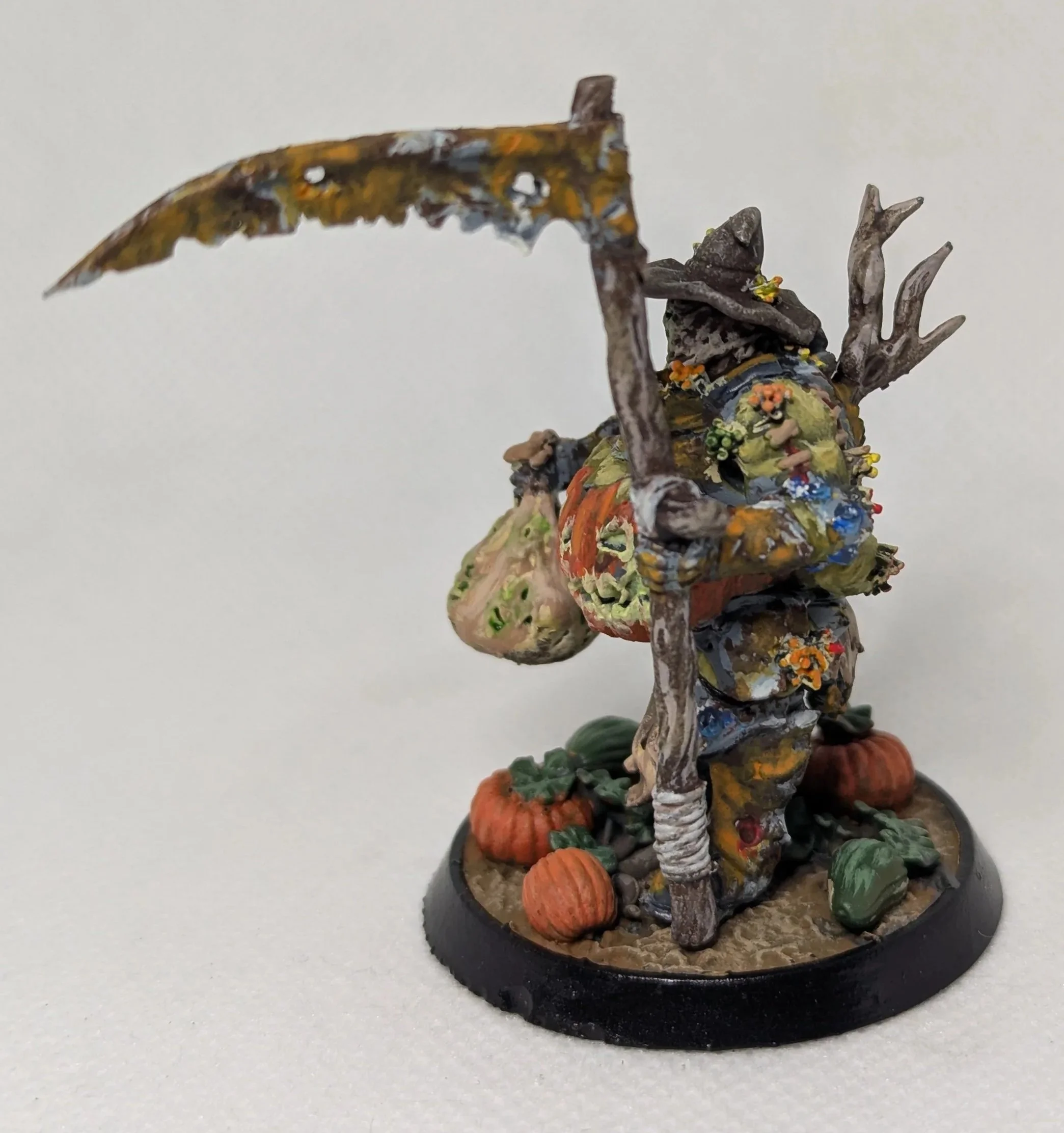
I used Vallejo Mecha Colour Rust Texture to build up texture on the blade, and while the texture itself looked convincing, the colour felt extremely flat once it dried. It had the right physical surface, but visually it lacked depth and variation.
The effect only really came together once I started layering paint back over the top of it.
Adding lighter browns, oranges, and a few selective highlights completely changed the finish. Suddenly, the texture started working with the colour rather than against it, and the rust began looking far more believable and natural.
That ended up being one of the biggest lessons from this miniature.
Texture products can create a really strong foundation, but they still need proper paintwork layered over them to fully sell the illusion.
Subtle OSL and Ethereal Lighting
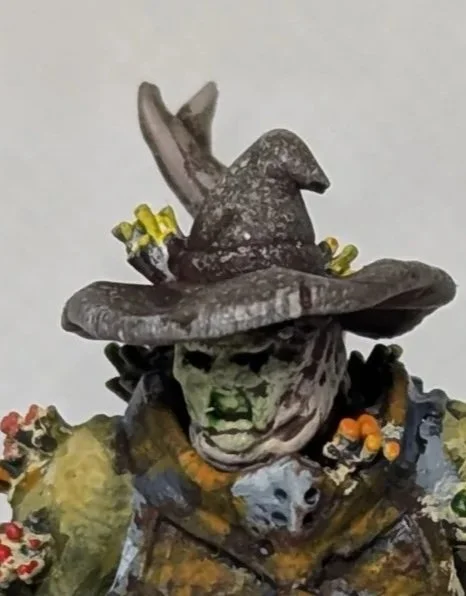
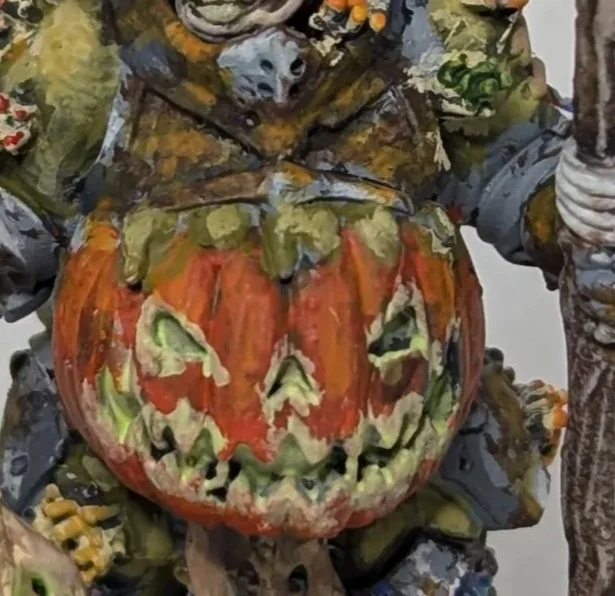
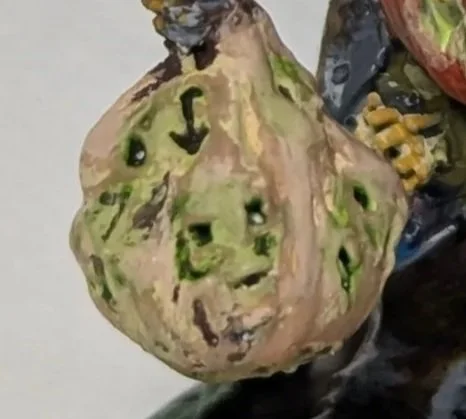
Even though I wanted this project to move back toward a more traditional style, I still couldn’t resist using a little bit of OSL.
Just far more restrained this time.
The glowing green elements around the miniature felt perfect for adding a subtle supernatural quality without overwhelming the rest of the paint job. Rather than dominating the miniature like the Chaos Dwarf project, the lighting here was mostly used to accentuate the otherworldly nature of the sculpt.
I think that balance worked much better for this kind of model.
The glow supports the atmosphere without becoming the entire focus of the miniature.
That restraint was probably something I struggled with more during the Chaos Dwarfs, where I often felt tempted to keep pushing the effects further and further. Here, because the lighting was treated more as an accent rather than the core identity of the model, it helped preserve the natural mood and textures already present in the sculpt.
And honestly, I think the miniature benefited from that.
The Small Details That Made the Model
A lot of my favourite parts of this miniature ended up being the smallest details.
The mushrooms and fungi were probably the biggest surprise. The brighter reds, oranges, and greens gave the model these little pockets of saturated colour that helped break up all the muted browns and earthy tones across the rest of the sculpt.
Without them, I think the model could have become visually very heavy.
Instead, they create small areas that immediately pull your eye around the miniature and add a bit of life to an otherwise fairly grim palette.
The pumpkin itself was also something I wanted to push further than a standard bright orange.
Rather than looking fresh, I wanted it to feel like it was beginning to rot. The darker recesses, desaturated patches, and uneven colour transitions helped give it a much more aged and sickly appearance. Combined with the glowing interior, it ends up feeling somewhere between organic and supernatural, which suited the overall atmosphere of the miniature perfectly.
That balance between decay and fantasy was probably the part of the project I enjoyed most.
Looking Back
This miniature ended up being exactly the kind of project I needed after the Chaos Dwarfs.
Not because it was easier, but because it reminded me how enjoyable simpler, more traditional painting approaches can still be.
There’s something really satisfying about letting the sculpt itself carry the atmosphere rather than trying to engineer every visual effect through lighting alone.
At the same time, I don’t think I would have painted this miniature the same way before the Chaos Dwarf project either. Even though the OSL here is subtle, I can still see how much that larger project changed the way I think about light, contrast, and focal points in general.
So in a strange way, this miniature feels like a combination of both approaches.
More restrained.
More texture-focused.
But still shaped by everything I learned while pushing OSL far harder than I normally would.
And honestly, that balance feels like a much healthier place for my painting moving forward.
Overall, this was just an incredibly enjoyable miniature to work on.
Sometimes it’s nice to stop chasing complexity for a while and simply focus on making a model feel atmospheric, cohesive, and fun to paint.
On to the next.
And remember: always Paint Your Way
Related Content
