
Mecha Competition Build – Part 3: From Battle-Damage to Battlefield
This is Part 3 of my Necrosknight competition build. If you haven't already, check out Mecha Competition Build – Part 2: When the Plan Changes before reading on.
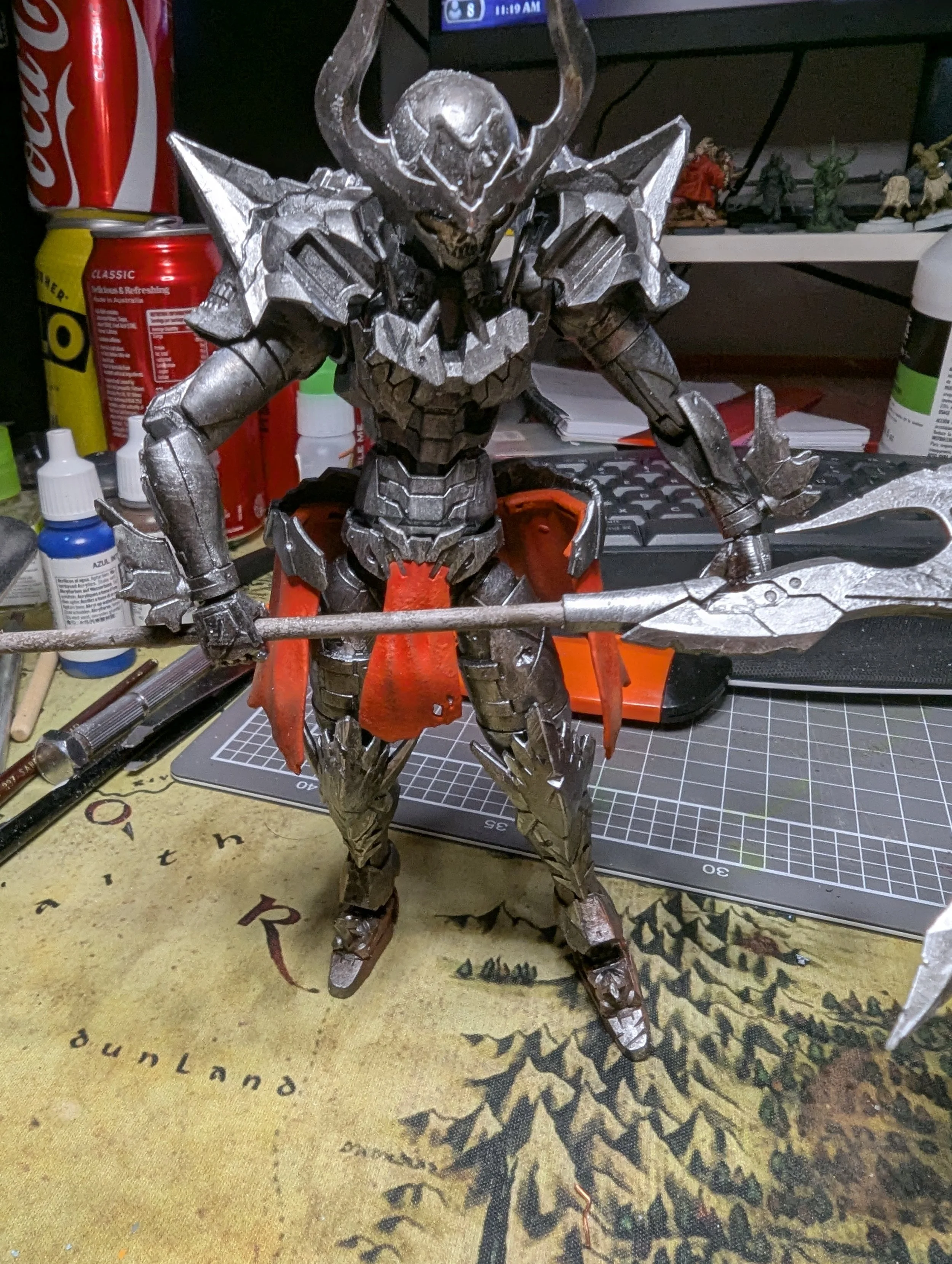
With the Necrosknight and Rosan Lancer now painted and the major battle damage completed, the diorama is finally starting to look like the scene I had imagined when I first changed the composition of these two models.'
While the Necrosknight isn't technically a traditional Gunpla kit, this project has been a natural extension of my Gunpla journey. I've always enjoyed taking models beyond simply building them out of the box—experimenting with modifications, painting, weathering and trying to create something that tells a story.
That is really what my Gunpla projects are all about: taking a model and finding my own way of turning it into something more personal.
This competition has given me a chance to push that idea even further. Rather than simply presenting two finished models, I wanted to create a scene that showed these machines in the aftermath of a battle.
There was still quite a bit of work to do before I could get to the painting stage, though. One of the requirements for the competition is to incorporate plaplate and wires or tubes into the build, so I needed to make sure these materials weren't simply added for the sake of meeting a requirement. I wanted them to become part of the story and the damage itself.
Making the Damage Tell the Story
I used a mixture of Milliput and plaplate to fill the excess peg holes, cleaning up the exterior of these models. This was the first time using plaplate. It was really easy to cut, especially with small straight lines and a sharp knife.
However, most of my attention has been placed on the most important area, the damage caused by the Rosan Lancer's Lance.
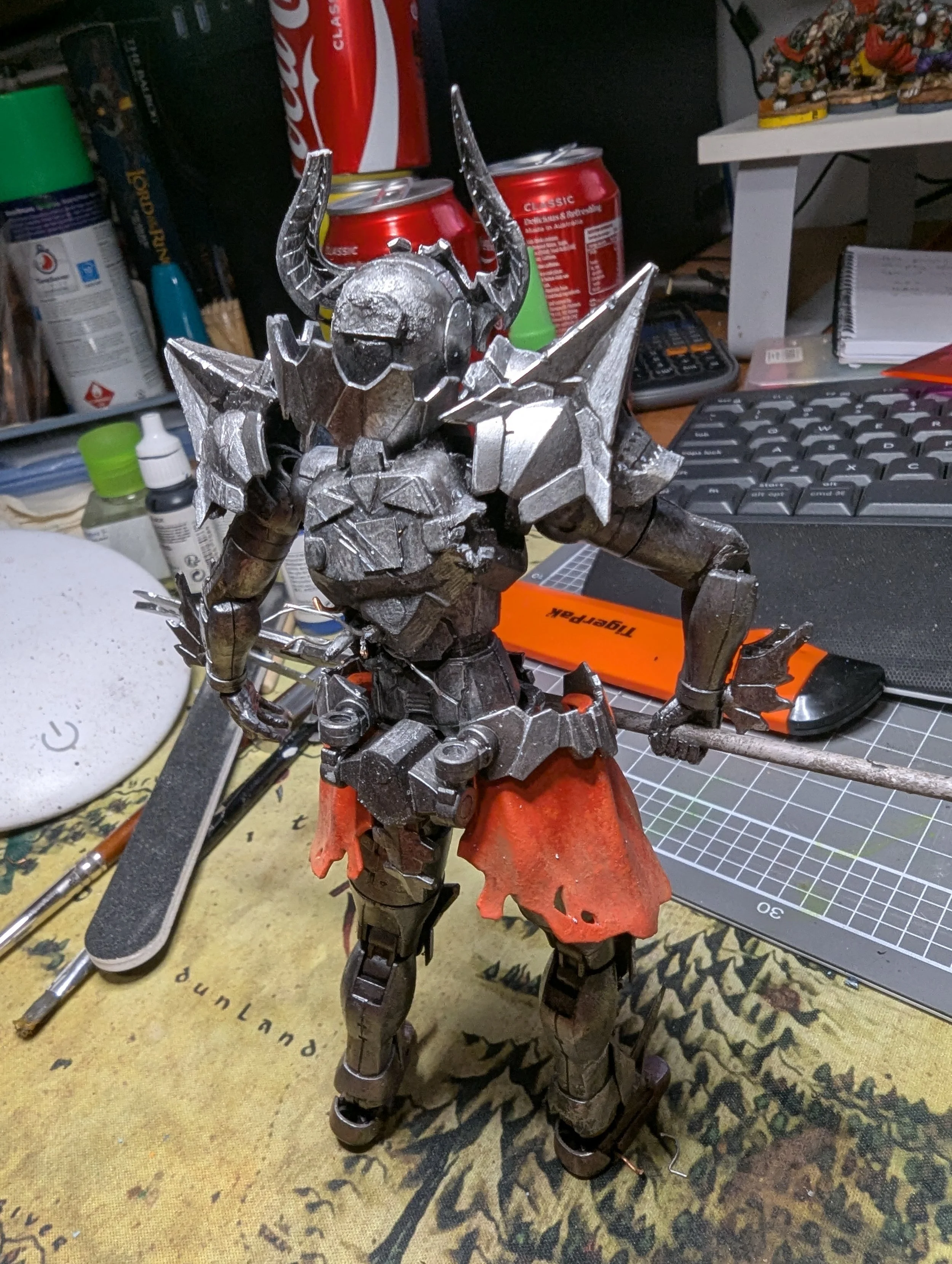
The Lance has gone completely through the Necrosknight's chest, so I wanted the damage to suggest that it had done more than simply punch a hole through the armour. I added wire around the damaged area to represent the internal cabling and wiring that has been torn apart as the Lance passed through.
It's a relatively small detail, but I think it helps sell the idea that there is something beneath the armour. The damage isn't just a hole in the model; it is damage to a machine that was once functioning.
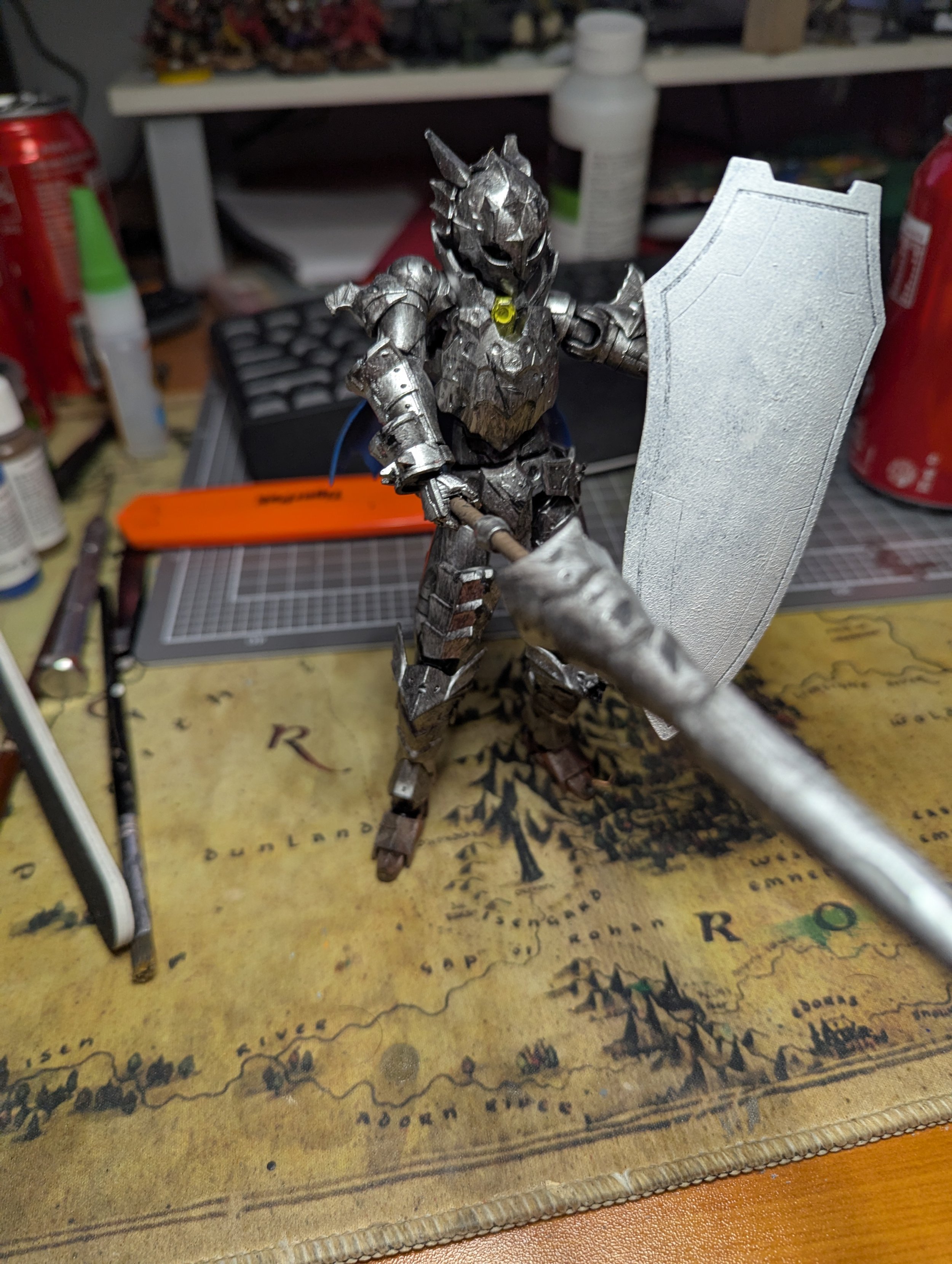
While completing the hole in the Necrosknight, I realised the cape was going to hide all the work I had just worked so hard on. Now, because both models have the same base model, I was able to instead use it on the Lancer, giving it a nice pop of colour and allowing me to create the blue vs red look that I was after.
I also made some changes to the shoulder armour on both machines.
On the Necrosknight, I modified the shoulder plates so that they are attached directly to the shoulders rather than being connected via the backpack. I also removed the cloth on the shoulder pads. On the Rosan Lancer, I decided to remove the shoulder plates completely.
These changes help differentiate the silhouette of the two fighters, bulking out the ‘villain’ and slimming down the ‘hero’. I find this style helps push the narrative I am trying to create.
Leaving the Metal Bare
One decision I was particularly happy with was to choose not to paint the machines' metallic parts.
Initially, I considered adding more colour and detail to the metal sections, but the more I thought about the story I wanted these models to tell, the less sense it made.
These aren't machines meant to patrol the streets or be shown off at parades.
They are battle mechs that have already seen plenty of fighting.
Instead, I decided to keep the colour focused primarily on the cloth elements of the models.
This gives the machines a much more utilitarian appearance and, I think, helps make them feel like war machines rather than brightly painted display pieces. These are mechs built for battle; adding colour simply creates an easy target. This is why the cloth is bright it draws the eye in battle, potentially creating an opening.
A Battlefield Lost to Time
With the models coming together, I also started thinking more seriously about the battlefield these models will be.
I have decided that these two machines are going to be fighting around a desert, their private battle surrounded by nothing but sand
Rather than depicting an active battlefield, I want the scene to feel like a duel in the middle of nowhere known by no one but these two warriors.
The Necrosknight has been defeated.
It lies unmoving, the Rosan Lancer's Lance driven completely through its chest.
The Rosan Lancer has survived, but only just. Its pilot stands on the shoulder of his weary and damaged machine, looking over the battlefield.
That moment is what I want the final diorama to capture.
Not the battle itself, but the moment after the battle.
Two machines that have been pushed to their limits, with one finally standing victorious over the other.
Almost There
At this point, I'm really happy with how the two models are coming together.
The modifications, battle damage and painting are all starting to work together, and I feel like the story of the scene is becoming much clearer.
I'm going to leave the models alone for a couple of days before taking another proper look at the battle damage. Sometimes I've found that stepping away from a project for a little while makes it much easier to spot something that needs another touch or, just as importantly, recognise when something is already good enough and doesn't need to be changed.
I'll take another look with fresh eyes and see if there are any final details or last-minute touches that I want to add.
But for now, the machines are essentially done.
The only piece of the machines left to finish is the shield of the lance, and I want to try and stencil on a house crest or animal, but that is a job for the weekend to figure out.
With the models all but completed, that means it's time to move on to the next and probably biggest part of this project.
The battlefield.
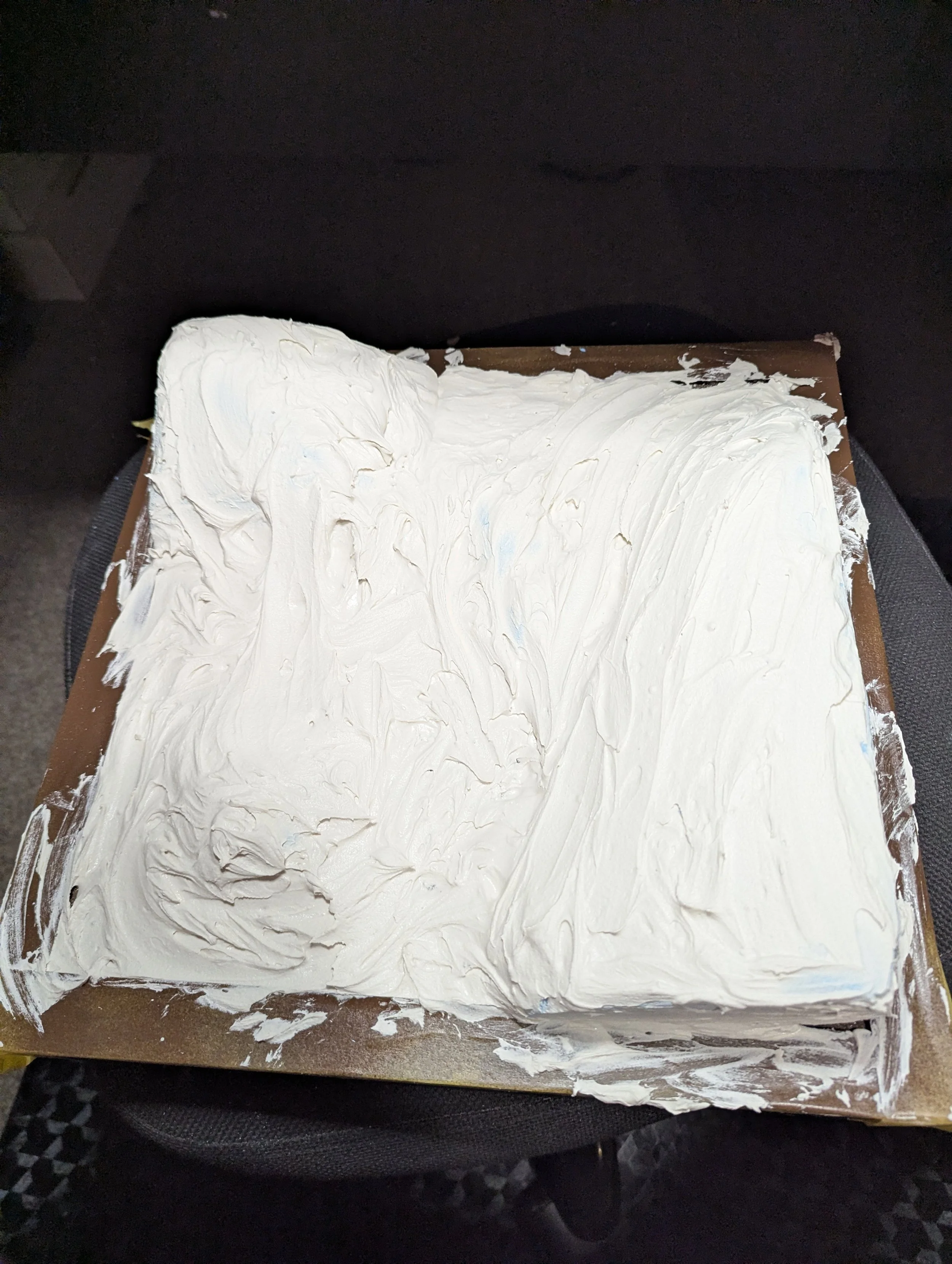
The desert is where this whole scene is going to come together, and now I get to start building the environment that these two battered machines have been fighting in.
I picture two giants standing amongst the dunes with nothing but sand around for kilometres.
The next stage is going to be about creating a place that feels ancient, abandoned and forgotten—a battlefield that has been swallowed by the desert and left behind for time to reclaim.
Now it's time to build the battlefield.
On to the next.
And remember: Always Paint Your Way
Further Reading
If you enjoyed this project, you might also like:
Mecha Competition Build – Part 2: When the Plan Changes- Part 2 of my Mecha comp diorama
My First Mecha Competition Begins – Building the Necrosknight - The start of my first mecha comp.
Building a Nurgle Blood Bowl Team from the Bits Box - Building my soon-to-be Nurgle Blood Bowl Team
